 JAPAN
Explore Tokyo districts
 Central Mito
Mito: Kodokan’s Tatami Corridor, Castle Gates and Earthworks
I’d put the former domain school and castle ruins together: Kodokan’s main hall, Shizendo and long corridor, followed by Ote Bridge, earthworks and the reconstructed turret. One part explores how people studied; the other follows the castle’s use of its plateau.
Open this notebook Miyanoshita
: Fujiya’s architecture and archives, then steps into the Hayakawa valley
Old buildings and shops line Miyanoshita’s main road; a turn leads down toward the Hayakawa valley. I would first spend time with Fujiya Hotel’s public architecture and history displays, with an audio guide as an option. With energy left, the afternoon can continue to Dogashima’s steps and suspension bridge. For gentler walking, the public hotel areas and shopping street can fill the half day.
Open this notebook Monzen-nakacho
A Tokyo Monzen-nakacho walk: Sanskrit walls, golden mikoshi and the Sumida River
Monzen-nakacho brings religious places and everyday streets together. Follow the approach to Fukagawa Fudodo’s contrasting halls, look for portable shrines and sumo history at Tomioka Hachimangu, then finish beside the Sumida River in Etchujima Park. This route centers on outdoor visits that can be planned with confidence, with time for lunch and an unhurried riverside ending.
Open this notebook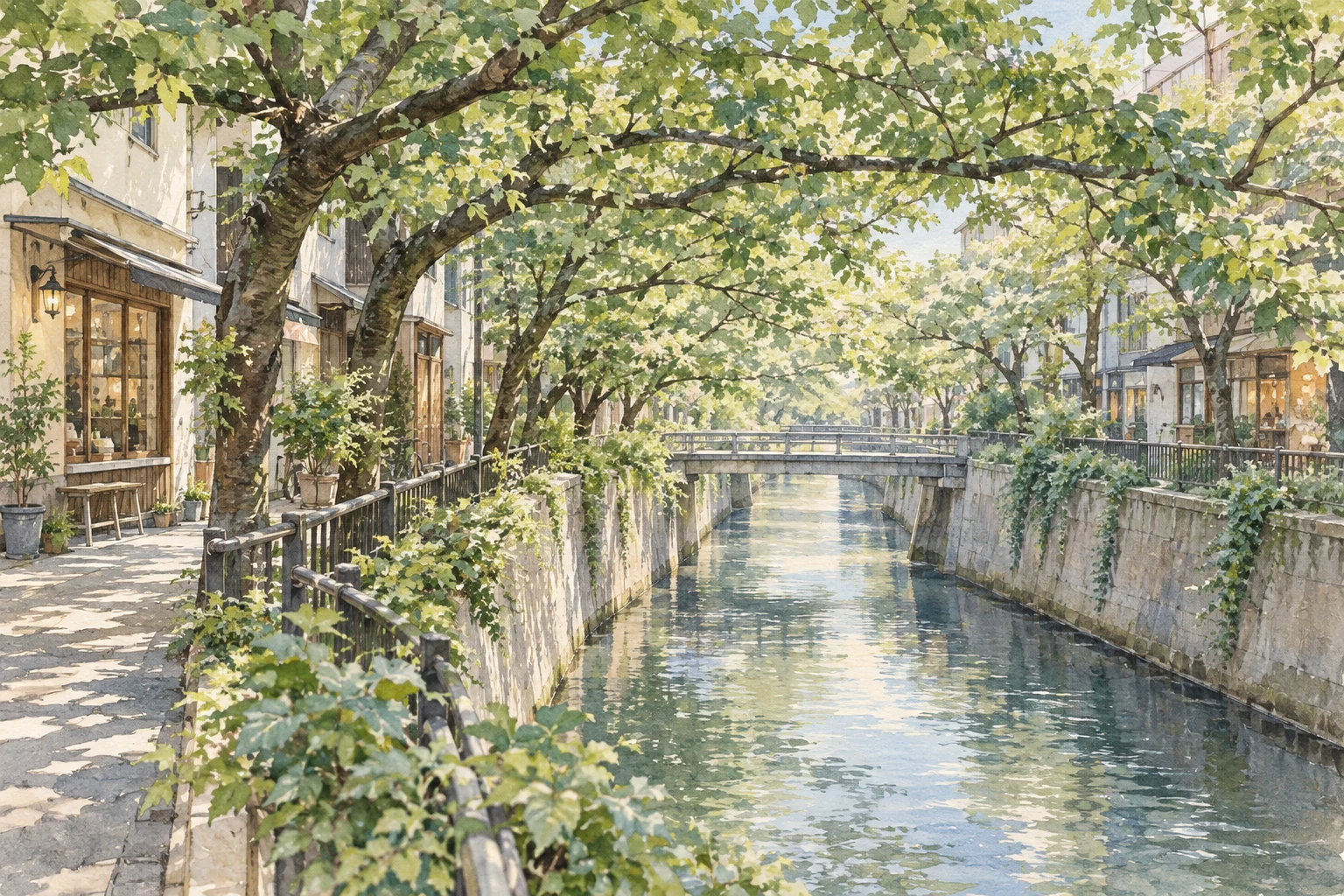 Nakameguro
 in a day: nihonga, the river and cafés
Join Gai Xiaomi for Sato Sakura Museum, a short river walk, lunch and coffee near the station. Bridges, trees and small shops make this rewarding beyond cherry-blossom season.
Open this notebook Nakaminato
: fresh fish, dried seafood and a meal by the harbour
I'd compare fresh fish and dried products before choosing today's seafood meal. Shops line Nakaminato's waterfront; the lanes and fish boxes lead back to shore, where you can see the water between shopfronts, market buildings and boats.
Open this notebook Naritasan Omotesando
: merchant-house slopes and how yokan is made
Walking from Narita Station towards Shinshoji, I would leave time for the eaves, lattice windows and shopfront displays along Omotesando’s slopes. In Kamicho, a turn behind Yoneya’s main shop leads to the Yokan Museum, with azuki beans, sugar, agar and historical tools. The street rises and falls, making the museum a useful indoor stop along the way.
Open this notebook Naritasan Shinshoji
: carved halls and a walk around three ponds
I’d divide Shinshoji into two walks: first the main hall, three-story pagoda and relocated Shakado, then the ponds, Ukimido pavilion and wooded paths of Naritasan Park. There are steps and slopes, so each part can have as much time as your energy allows.
Open this notebook Nihon-odori
: Old Yokohama Photographs and a Newspaper of Your Own
I'll pair two different museums along Nihon-odori: first the old building, documents and city photographs at Yokohama Archives, then headlines, reporting and printing machinery at the Newspaper Museum. If you enjoy making things, leave time to write a short news item of your own. It's also a comfortable route for a slow rainy-day visit.
Open this notebook Nihonbashi
, Tokyo: find the kirin, see Mitsukoshi’s celestial maiden and sip bonito dashi
In Tokyo’s Nihonbashi, the old city’s stories are waiting just above eye level: winged kirin on the bridge, a celestial maiden sculpture rising through Mitsukoshi’s atrium, and a red torii among tall buildings. Follow Gaimi from the bridge toward Muromachi, allowing 2–3 hours for architecture, department-store browsing and a shrine visit. Add a small cup of bonito dashi to discover a foundation of Japanese cooking.
Open this notebook Nikko Shrines & Temples
Nikko’s shrines and temples: Yomeimon carvings, gardens and wooded paths
At Nikko’s shrines and temples, I’d begin with close details: Yomeimon’s gold-and-white carvings, the Three Wise Monkeys on the sacred stable and the Sleeping Cat beside peonies. Then Rinnoji offers Sanbutsudo, Shoyoen Garden or Taiyuin’s wooded approaches, depending on time. Shinkyo and the Daiya River make an optional stop on the return. The two temple and shrine complexes have separate tickets, with routes adaptable to your energy.
Open this notebook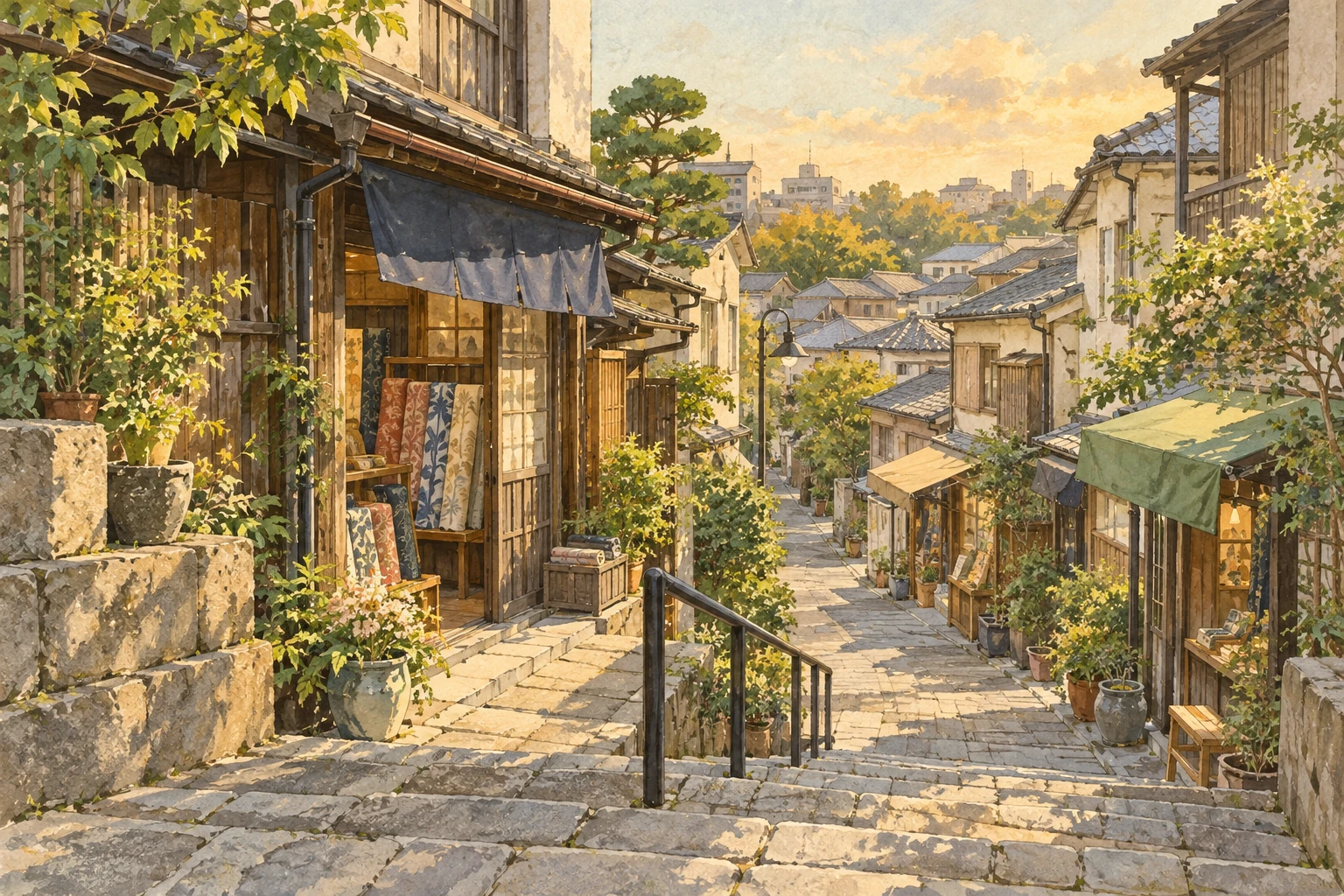 Nippori & Yanaka
A day in Nippori and Yanaka: fabrics, temple paths and neighbourhood snacks
Follow Gai Xiaomi from fabric rolls and sewing tools east of Nippori to Yanaka’s temples, trees and everyday shops to the west. Three main stops and two optional details can be shortened for shopping, quiet walking or a snack-filled half day.
Open this notebook Noge
Noge: Animals by Day, Riverside Shops at Miyakobashi towards Evening
I'll head up Nogeyama first and take time with a few animals at the zoo, then walk downhill into Noge. At Miyakobashi, we'll start from the bridge side to see how the row of shops follows the Ooka River's bend. If you want to sit down for food or drinks, ask about seating and charges first. Daytime and evening have different rhythms, so a break in between makes the visit more comfortable.
Open this notebook